


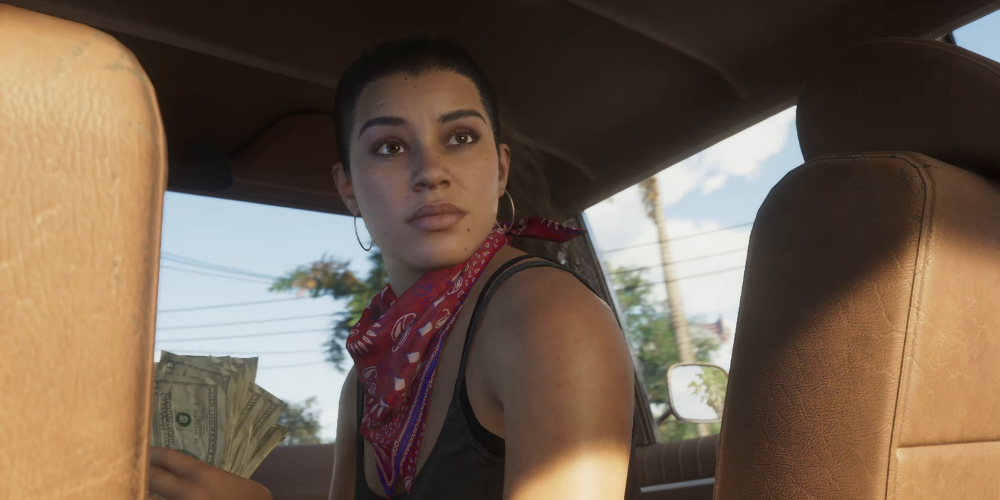
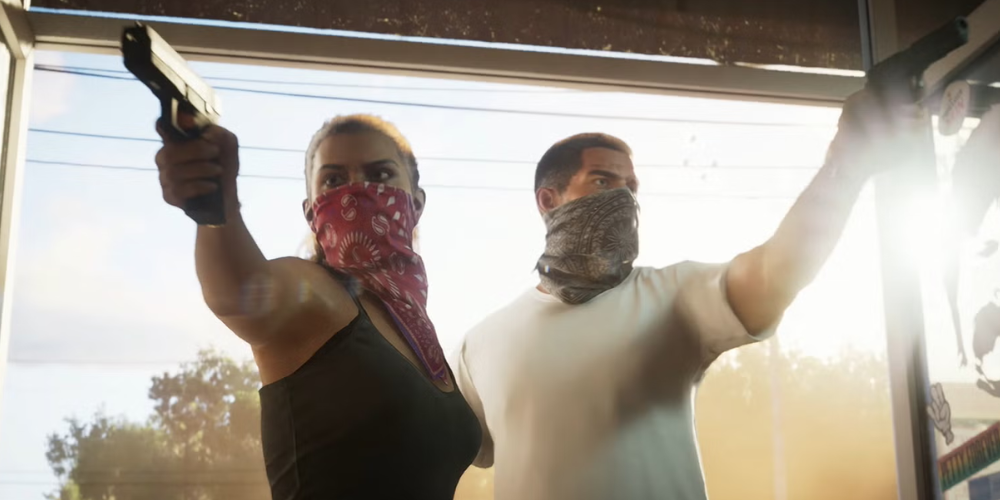
Grand Theft Auto VI arrives with the kind of pressure only a handful of games ever face. It is not just another open-world crime drama; it is the game everyone has been watching, waiting for, and dissecting long before release. After spending time with it, the first thing I can say is simple: this is not a cosmetic upgrade to a familiar formula. It is a major step forward in scale, animation, ambient life, and narrative confidence. Rockstar has taken what worked before and built something sharper, denser, and far more reactive.
As an experienced gamer, I look for a few things in a giant sandbox like this: freedom that actually feels free, missions that don’t turn into busywork, a world that remains interesting after the novelty fades, and systems that reward experimentation. GTA VI hits all of those marks more often than not. It still carries the DNA of the series, but the pacing, the control feel, and the way the city breathes give it a distinct identity. This is a game designed for players who want to play slowly, soak in the atmosphere, and still have the option to go wild when the mood strikes.
A living world that finally feels like it is watching you back
The biggest compliment I can give GTA VI is that its world feels less like a backdrop and more like a place with memory. Pedestrians react with clearer intent, traffic patterns feel believable, and neighborhoods change tone depending on the hour. You do not just drive through spaces; you notice how they respond to your presence. That matters in a game this size, because immersion is not a single feature. It is the accumulation of tiny details that keep the illusion intact.
Vice City, reimagined here, is a standout. It has the gloss, heat, and swagger you would expect, but it also carries a grounded texture that makes the setting feel modern rather than nostalgic. The coastline, suburbs, nightlife districts, and swampy edges all contrast well. You can spend a whole session simply moving between regions and still see fresh visual storytelling. That variety keeps the game from feeling repetitive, especially when many open worlds collapse into the same loop of objectives and map markers.
Story and characters with real momentum
The narrative takes its time to establish its central pair, and that patience pays off. The chemistry is not forced, and the writing lets tension, humor, and loyalty overlap in ways that feel natural. The series has always balanced satire with drama, but GTA VI leans harder into character-driven storytelling than its predecessors. As a result, the missions feel more personal. You are not simply completing jobs; you are watching relationships evolve under stress.
I appreciated that the game does not rush every scene toward the next explosion or chase. It allows quieter moments to land. Conversations during travel, pauses between major beats, and the occasional slow burn all give the story room to breathe. For players who care about more than checklist progression, this is one of the game’s strongest points.
How it feels to play moment to moment
Moment-to-moment play is where GTA VI earns its place at the top. Shooting feels cleaner, movement is more deliberate, and the cover system is less awkward than before. The game still prioritizes spectacle, but it is more consistent when you want precision. Whether you are sneaking into a location, chasing a target through traffic, or improvising during a chaotic escape, the controls rarely get in the way.
Driving deserves special praise. Cars have weight without becoming sluggish, and different vehicle types behave in ways that make sense. High-speed pursuits feel tense because the handling gives you room for small corrections instead of demanding perfection. The city’s street layout also supports repeat play well, since routes are open enough for improvisation, but structured enough to make mastery satisfying.
Combat is not trying to reinvent the genre, but it is much more polished than in earlier entries. Encounters have better flow, animations transition more naturally, and gunfights feel less clunky under pressure. I still think the series works best when it blends action with planning, and GTA VI gives you enough tools to approach scenarios your own way. That flexibility is important, especially for a game where players will spend hundreds of hours testing its systems, experimenting with cheats, and later browsing mods on PC.
Freedom, chaos, and the series’ classic identity
The heart of GTA has always been freedom. Some players want to follow the story, while others want to ignore it and simply explore, cause mayhem, and discover what the game lets them get away with. GTA VI preserves that spirit, but it adds more structure around the chaos. You can still lose yourself in side activities, random encounters, and city distractions, yet the game feels less like a random toybox and more like a carefully designed ecosystem.
That balance matters. Too much structure would suffocate the series, but too little makes a world feel shallow. Here, the game manages to encourage both disciplined play and reckless detours. It is easy to deviate from the main path and spend an hour just absorbing the city, trying different vehicles, or seeing how various systems react. That ability to choose your own pace is a big reason the game feels so replayable.
Replay value and player expression
GTA VI seems built for long-term ownership rather than a one-weekend finish. Even after credits, there is still room to experiment with routes, mission approaches, and side content. If you are the kind of player who likes to master a world, this game gives you that runway. Fans will search for cheats, compare mods, and trade stories about unusual outcomes for a long time, which is always a sign that the sandbox is doing something right.
It also helps that the game’s systems invite player expression without turning every decision into a performance test. You can play aggressively, cautiously, or somewhere in between. That flexibility gives the game a social life beyond the campaign, especially once people begin sharing clips, challenges, and custom content across platforms.
Visuals, sound, and technical presentation
Technically, GTA VI is one of the most impressive open-world releases I have seen. The lighting is exceptional, the weather effects sell the humidity and glare of the setting, and facial animation has reached a level that makes scene work much more convincing. There are moments where you stop thinking about systems entirely and just take in the environment. That is a sign of strong art direction as much as raw horsepower.
The sound design is equally important. Engines growl with personality, city noise has layers, and music placement feels intentional rather than decorative. Radio stations remain part of the series’ charm, but the real win is how the ambient soundscape supports immersion. Even walking through dense urban areas, you hear enough variation to make each district feel alive.
Performance, depending on the version and settings, will matter a great deal because this is the kind of game that invites close scrutiny. On a capable system, the release should shine. On weaker hardware, players will naturally want guidance on whether to install updates, adjust settings, or rely on cloud access where supported. That is the reality of a high-end launch: ambition and accessibility have to meet somewhere in the middle.
Is GTA VI worth your time?
Yes, and not just because it is Grand Theft Auto. It is worth your time because it understands what made this series influential and then pushes those ideas forward with confidence. The world is richer, the characters are more grounded, the missions are better paced, and the overall experience feels like a serious evolution rather than a safe retread.
I would not call it perfect. No giant open-world game is. There will be moments where pacing dips, where you wish a system were a bit smarter, or where you think a mission could have offered more branching options. But those criticisms sit beside something much larger: this is a game that knows how to keep you engaged. It respects your time while still giving you license to wander, experiment, and return on your own terms.
For longtime fans, GTA VI delivers the scale and polish they hoped for. For newcomers, it is one of the rare games that can justify its reputation by simply existing in your library. Whether you plan to play the story straight through, explore every side activity, search for free community content, or tinker with mods later on PC, this is a release that will likely define open-world conversation for years.
Verdict: Grand Theft Auto VI is a landmark open-world game that combines spectacle with control, satire with sincerity, and freedom with purpose. It does not just meet expectations; it gives them a new shape.
How to download Grand Theft Auto VI
Availability & Launch: Grand Theft Auto VI is a premium release, so it is not free in the standard sense. You can download it through official digital stores once it is available in your region, or buy a physical copy where supported. Avoid unofficial mirrors, since unblocked downloads from random sites are often unsafe.
Platforms: At launch, Rockstar has focused on current console platforms, with PC support typically arriving later for major entries in the series. If you want to play on unsupported devices, you may need cloud streaming where available, rather than an emulator. Always check the official store page for the exact platforms and download options in your region.
Install: On supported hardware, sign into your store account, purchase or redeem the game, then install from your library. Make sure you have enough storage, download the latest patch, and allow the game to complete its first launch setup before playing.
System Requirements: For PC, a modern multi-core CPU, 16 GB RAM or more, and a strong GPU are a safe starting point; exact minimum specs will depend on the final release. Mac and Android are not typical native targets for a game of this scale, so if those versions are unavailable, cloud access may be the only practical route.
Cheats / Mods: Cheats are usually limited to single-player features or built-in codes, while mods are generally a PC-only community activity and may be restricted depending on the game mode. Online play often has stricter rules.
Unblocked Access: Playing at school or work is unlikely to be practical or allowed, and unblocked versions are not something to rely on for this title. If access is restricted, use official channels and play in a permitted environment.


